National Recognition

National Recognition

Our patient care efforts have earned us national recognition as a healthcare leader, meaning that we provide the highest level of available care to our patients in the communities we serve.

Top 10% in United States for Rehabilitative Care – It Matters!

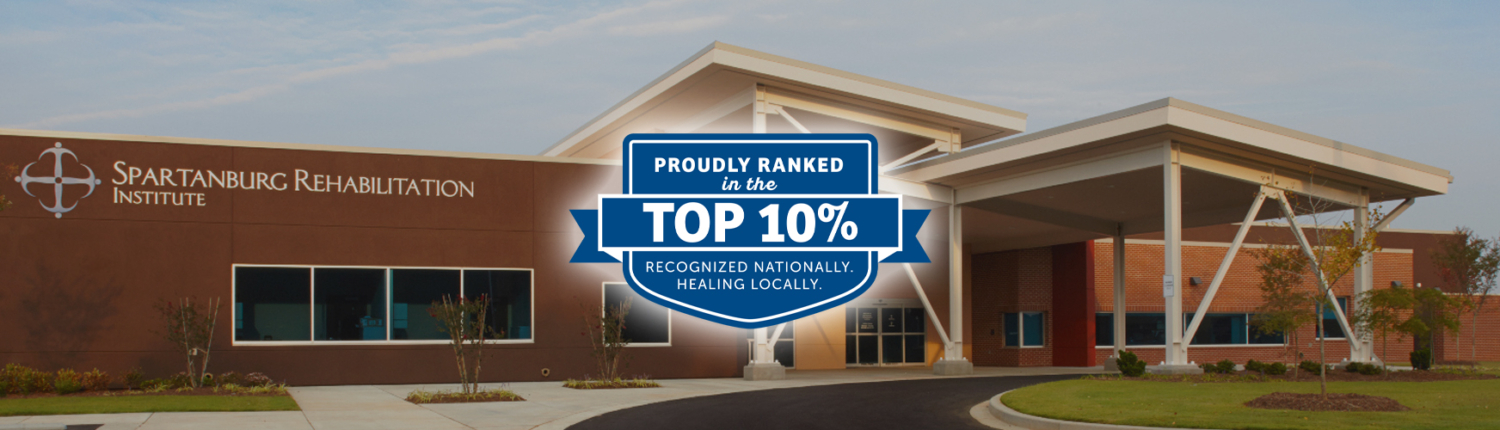
Spartanburg Rehabilitation Institute ranked in the top 10 percent of inpatient rehabilitation facilities in the United States for 10 years.

The ranking is by the Uniform Data System for Medical Rehabilitation (UDSMR), a not-for-profit corporation that was developed with support from the National Institute on Disability and Rehabilitation research, a component of the U.S. Department of Education.

The UDSMR ranks rehabilitation facilities based upon care that is:

  1. Patient-Centered
  2. Effective
  3. Efficient
  4. Timely

This means that through services at Spartanburg Rehabilitation Institute, our patients are receiving the highest level of rehabilitative care available – without having to leave the area.

UDSMR, which administers the world’s largest medical rehabilitation database, provides common language and measurement tools to monitor patient results.

Through UDSMR, our hospital collaborates with peers throughout the United States to share information and establish best practices for patients. This helps us elevate rehabilitative care for everyone across the United States.

The ranking was provided by the Uniform Data System for Medical Rehabilitation (UDSMR), a not-for-profit corporation that was developed with support from the National Institute on Disability and Rehabilitation research, a component of the U.S. Department of Education. The UDSMR maintains the world’s largest database for medical rehabilitation outcomes. Through UDSMR, the hospital collaborated with peers throughout the United States to share information and establish best practices for everyone across the nation.

Advanced Stroke Certification

Spartanburg Rehabilitation Institute has received The Joint Commission’s disease-specific certification for stroke rehabilitation, which signifies the hospital’s dedication to developing better results for stroke patients. The award is given after a rigorous on-site review by an expert evaluator.

The award recognizes how committed we are and how well we provide rehabilitation following a stroke. Through our services, we want to provide hope and quality of life to our community members who have experienced this debilitating event.

Certification through the Joint Commission’s Disease-Specific Care Program is voluntary and available only to stroke programs in Joint Commission-accredited acute care hospitals. Certification requirements address three main areas:

  • Compliance with consensus-based national standards
  • Effective use of evidence-based clinical practice guidelines to manage and optimize care
  • Organized approach to performance measurement and improvement activities

Amputee Rehabilitation Certification

Spartanburg Rehabilitation Institute is recognized nationally for developing better results for amputee patients. The hospital earned The Joint Commission’s disease-specific certification for Amputee Rehabilitation after a rigorous on-site review of the hospital’s compliance with national standards, clinical guidelines, and outcomes of care.

Amputation is when all or part of an arm or leg is removed surgically to treat an injury, disease or infection. After an amputation, an individual can face a difficult period of physical and emotional recovery. Rehabilitation following an amputation can enhance a patient’s recovery process and minimize functional disability. The goal is to help our patients reach the highest level of independence possible following an amputation so they can enjoy the highest quality of life possible.

Certification through The Joint Commission’s Disease-Specific Care Program is voluntary.
Parkinson’s Rehabilitation Certification

Spartanburg Rehabilitation Institute is certified as a Center of Excellence in Parkinson’s disease by The Joint Commission.

Certification is voluntary and given after a rigorous on-site review of the hospital’s practices, programs, and outcomes in treating patients with Parkinson’s disease. It is available only to acute care hospitals that are accredited by The Joint Commission.

Although there is no known cure for Parkinson’s disease, research has shown that a combined focus on medical management and intensive rehabilitation can dramatically improve function and quality of life in individuals living with the disease.

When an individual has Parkinson’s disease, vital nerve cells in the brain – called neurons – malfunction and die. Some of these dying neurons produce dopamine, a chemical that sends messages to the part of the brain that controls the body’s movement and coordination. The amount of dopamine decreases as Parkinson’s disease progresses, which causes difficulty for an individual to control his or her body movements.

A key component of our hospital’s Parkinson’s disease program includes having an interdisciplinary team that coordinates patients’ therapy and medications to gain the best results. Members of the healthcare team – including nursing staff, physicians, pharmacists, and therapists – work together to ensure medications are delivered in a timely manner to maximize the functional benefits of aggressive therapies, and to minimize the impact of possible medication side effects. The patient’s response to medication adjustments are closely monitored by all clinical staff and communicated back to the patient’s treating neurologist, thereby allowing for increased accuracy of “fine tuning” of any medication changes that need to be made.

This approach helps to provide patients with:

  • Improved “on-time” of medications throughout the day where the medication is working well, making it easier to move and function
  • Decreased “off-time” where movement is more difficult
  • Improved muscle function
  • Improved tremor/dyskinesia management
  • Less rigidity and increased mobility
  • Increased independence in performing everyday activities
  • Better management of non-motor symptoms like cognitive disorders and sleep disturbance
Top 10%

Recognized in the Nation’s Top 10%

Spartanburg Rehabilitation Institute has been ranked by the Uniform Data System for Medical Rehabilitation (UDSMR), a non-for-profit corporation that was developed with support from the National Institute on Disability and Rehabilitation research, a component of the U.S. Department of Education. It ranks rehabilitation facilities based upon care that is patient-centered, effective, efficient, and timely.

Through UDSMR, our hospitals collaborate with our peers throughout the United States to share information and establish best practices for patients. This helps us elevate rehabilitative care for everyone across the United States.

© Copyright - Spartanburg Rehabilitation Institute | 160 Harold Fleming Court, Spartanburg, SC 29303

The terms "Ernest Health," the "Company," “we,” “us,” or “our” as used in this website refer to Ernest Health and its affiliates, unless otherwise stated or indicated by context. The term “hospitals” or "facilities" refers to entities owned or operated by subsidiaries or affiliates of Ernest Health. References herein to "Ernest Health" or to "our employees" refer to employees of affiliates of Ernest Health.
